
Welcome to our latest newsletter.
This month, we look at:
How Extra Detail Makes Time Feel Longer
When Changing Your Mind Means Changing Who You Are
Why People Value Prestige Over Money
What Choices In A Public Loo Reveal About Customer Comfort
Do you want to nudge your way to better results?
📈 Grow your business?
💰 Sell more?
💎 Increase customer value?
Email us to see how behavioural science can help you.
Every so often we use our Monkey Business newsletter to share useful nuggets, opinions, and findings as food for thought. Sign up here.

How Extra Detail Makes Time Feel Longer
Adding minutes to a duration can make it feel longer.
New research suggests that describing time in hours and minutes, rather than hours alone, changes how much time people feel is involved.
Using online course data and nine experiments, researchers found that adding a smaller time unit encourages us to imagine more numerous, smaller units. Those extra pieces make the duration feel longer.
Even “2 hours and 59 minutes” can feel longer than “3 hours”.
The effect also appeared with dates and times of day. A delivery promised by a particular hour can feel farther away than one described by its date alone.
For businesses, a longer duration may suggest more value when customers are buying your time. It might also suggest more inconvenience when you are asking for theirs.
Practical Business Takeouts:
Simplify time commitments. Where customers want something quick or manageable, use a single time unit in the main message. An accurately rounded “about 3 hours” may feel less demanding than “2 hours and 59 minutes”.
Show the detail when duration adds value. For courses, sessions or experiences sold partly on their duration, include hours and minutes where appropriate. The additional unit may make the time customers receive feel more substantial.
Keep precise delivery times out of the headline promise. Lead with the delivery date, then provide the hour where customers need it for planning. Adding clock time can make the wait feel longer, even when it specifies an earlier arrival.

When Changing Your Mind Means Changing Who You Are
Changing your diet sounds straightforward. Changing sides is another matter.
A new paper examines what happens when eating habits become identities. Labels such as vegan, carnivore or keto can express belonging, values and a view of the world.
That can help people stick with a behaviour. But it can also shape which evidence they accept. Advice that challenges the diet may feel like a challenge to the person and their group.
The commercial relevance extends beyond food. Products, brands and activities can all become expressions of who we are. A proposed change may offer practical advantages while asking customers to abandon something they value about themselves.
For businesses seeking new customers or encouraging new behaviours, the opportunity is to make the change compatible with the identity customers want to keep.
Practical Business Takeouts:
Connect the new behaviour to an existing identity. If customers see themselves as independent investors, test an advice service framed around checking their analysis and identifying blind spots. Show how using it supports their judgement. Asking them to become someone who delegates financial decisions creates a different proposition.
Check whether your strongest identity signals exclude prospects.Language that builds belonging can also mark the boundary of the group. A running brand could test “For serious runners” against messaging for people preparing for their first 10K. Track conversion among newcomers and existing customers separately: stronger appeal to one group may conceal weaker appeal to the other.
Let customers try the behaviour before adopting the label. An identity can make commitment attractive, but also make entry feel consequential. A food brand could invite meat eaters to try a particular plant-based dinner without asking them to “go vegan”. Test a specific meal proposition against a dietary identity proposition, measuring trial and repeat purchase.

Why Some People Value Prestige Over Money
A better title or more money? The answer may depend partly on personality.
Across four studies involving more than 1,000 employees, researchers found that people generally preferred private rewards. Those higher in narcissism also valued public recognition and were more willing to choose a better job title over higher pay.
The researchers found evidence of two psychological differences: greater desire for status and less concern about provoking envy. Being singled out can offer one person prestige while creating social discomfort for another.
Brands often rank rewards by cost, exclusivity or generosity. But customers may judge them by what they say about themselves, who will see them and how others might react.
Making a reward more visible could increase its appeal to one audience while reducing it for another.
Practical Business Takeouts:
Separate privileged treatment from public recognition. Offer the upgrade, priority service or exclusive access with a choice over visible badges and announcements. Customers can enjoy being valued without wanting their status displayed.
Give customers a choice between recognition and practical value. A loyalty programme could offer a public status badge or a private service benefit. A B2B advocacy programme could offer a speaking opportunity or an expert consultation.
Use different rewards to encourage the same action. For referrals, offer customers who value recognition a visible ambassador role. Give those who prefer discretion a private credit or benefit.
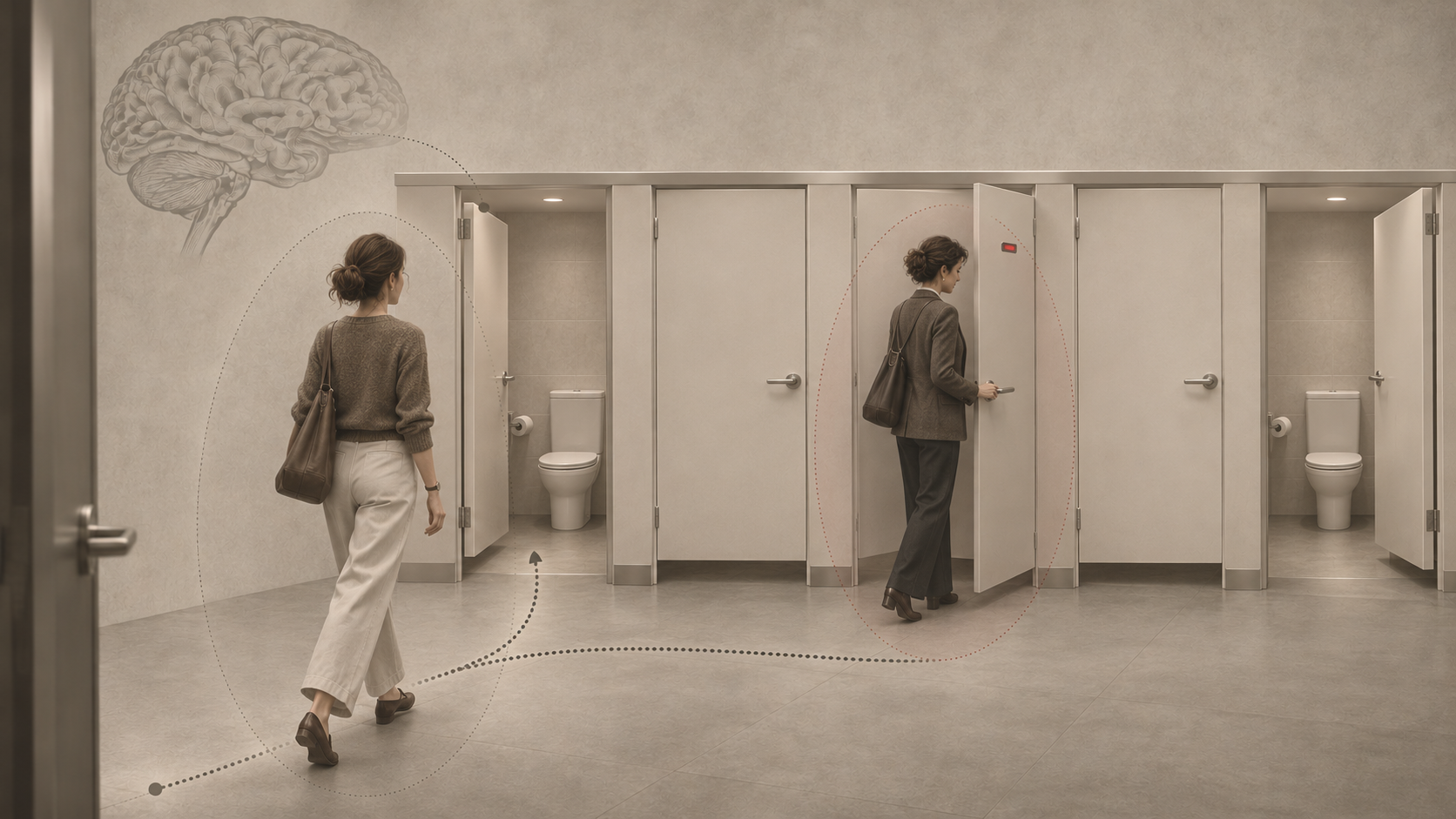
What Choices In A Public Loo Reveal About Customer Comfort
A public loo is an unusual place to look for lessons in customer experience. But choosing where to stand or sit reveals a familiar tension: convenience versus comfort.
Researchers studying restroom choices collected approximately 3,500 online responses showing how people would choose positions as facilities filled up.
Participants tended to avoid positions near the entrance and leave a gap between themselves and others. The researchers modelled these choices as a balance between avoiding neighbours, avoiding the entrance and avoiding unnecessary walking.
The study examined hypothetical choices, and these psychological explanations were inferred from the patterns. But it raises an interesting possibility for customer experience.
The most convenient place to approach may also feel the most exposed. A more secluded position may feel comfortable but require extra effort.
For businesses, encouraging participation could mean reducing both the effort of approaching and the discomfort of being seen or crowded.
Practical Business Takeouts:
Make the discreet option visible before customers approach. Show where a private conversation or demonstration can happen from the point where customers decide whether to engage. A secluded space offers little reassurance if customers must first announce their needs in public.
Avoid making the next customer stand beside the first. People preferred leaving a gap when they could. At demonstrations, sampling stations or service counters, stagger positions so one customer’s participation leaves a comfortable opening for someone else.
Bring privacy closer. The researchers identified competing tendencies to avoid the entrance and avoid walking farther. Offer a screened position near the customer’s route, rather than putting every discreet interaction at the back. Reduce the effort required to choose the more comfortable option.
😓 Tough business challenge? See if we can help. We probably can.

James, Patrick and Dan
We practically apply the science of the human mind for hard, commercial results
Please feel free to share.
➡️ Sign up for your own MONKEY BUSINESS by clicking here