
🧠 The Psychology of Imagined Ownership, Unfair Pricing & Social Memory
Welcome to our latest newsletter.
This month, we look at:
Why your brain predicts reality instead of simply observing it
Why customers can mentally “own” products before they buy them
Why audiences increasingly remember people and networks more than content itself
How unfair pricing creates physical hesitation before conscious thought
Do you want to nudge your way to better results?
📈 Grow your business?
💰 Sell more?
💎 Increase customer value?
Email us to see how behavioural science can help you.
Every so often we use our Monkey Business newsletter to share useful nuggets, opinions, and findings as food for thought. Sign up here.

Why Your Brain Treats Imagination as Reality
The human brain doesn’t just "think" about a product; it runs a full-scale simulation of owning it. New data from Caltech and Cedars-Sinai reveal that the boundary between seeing and imagining is far more porous than we assumed.
By monitoring single-neuron activity, researchers found that 40% of the cells used to see a physical object reactivate in an identical pattern when we simply imagine it.
This "distributed axis code" means your visual cortex effectively treats an internal thought as an external fact.
Practical Business Takeouts:
The Virtual Test Drive: Since the brain uses the same "code" for imagining as for seeing, a well-guided mental simulation could work like a successful product trial.
Vague claims might end up "invisible" to the brain: Whereas high-sensory details allow the customer’s visual cortex to render your offering clearly.
Lowering the "Rendering" Cost: Products that are cognitively easy to visualise may gain a head start because the brain requires less energy to simulate the ownership state.
Building Future Memories: Guiding a client through a success scenario builds a "memory of the future," making the final purchase feel like a natural continuation of a journey already started.
The Ownership Gap: Once these visual neurons fire, the brain begins to treat the imagined outcome as a possession, which can trigger a psychological drive to close the gap between the image and reality.
How Your Brain Is Less of a Camera. More of a Betting Shop.
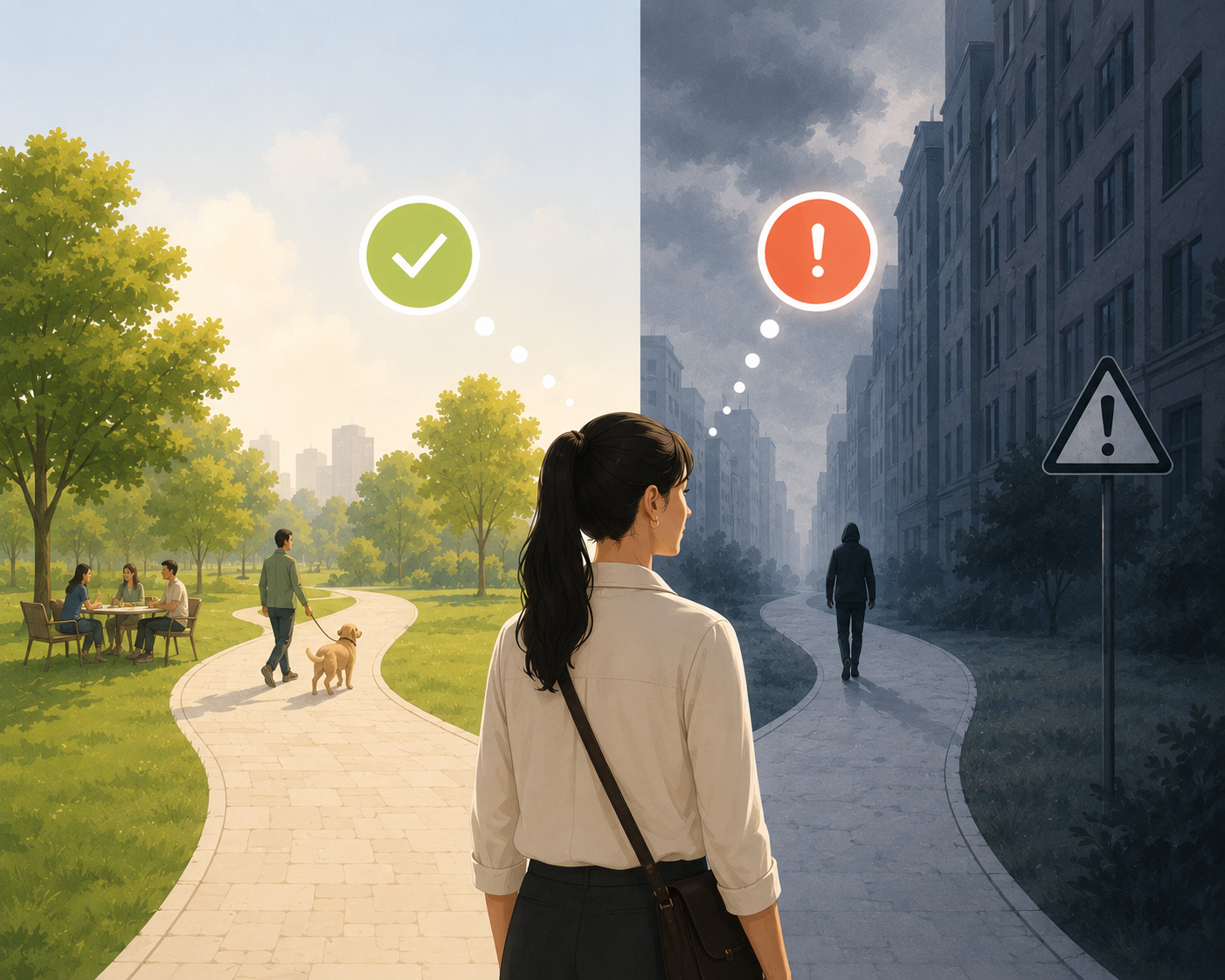
A new review from MIT and Northeastern University argues that the brain does not passively recognise the world and then decide what to do.
It predicts what matters first, then shapes perception around that prediction. In other words, categorisation is less filing cabinet, more advance booking.
This challenges the classic idea that we identify objects by comparing sensory input to stored prototypes. Instead, the brain appears to construct categories around possible actions.
Seeing a dog on an unfamiliar street triggers a different perceptual category than seeing the same dog outside your neighbour’s house. One prepares avoidance. The other prepares affection.
Up to 90% of synapses in the visual cortex are feedback connections, suggesting memory and expectation heavily shape perception. The brain compresses sensory detail into abstractions linked to goals, bodily needs and predicted actions.
Audiences interpret signals through anticipated consequences, existing action plans and emotional expectations.
Practical Business Takeouts:
Show people what happens next: Progress bars, delivery timelines and clear onboarding steps can reduce uncertainty and increase follow-through.
Familiar cues could build trust faster than originality alone: New products might benefit from looking slightly recognisable before becoming distinctive.
Small moments can trigger disproportionate suspicion: Unexpected fees, vague confirmations or unexplained delays make people anticipate problems before they occur.
People might not want lots of information upfront: They might want just enough clarity to decide whether continuing feels safe and worthwhile.
Your Hand May Spot an Unfair Deal Before Your Brain Does
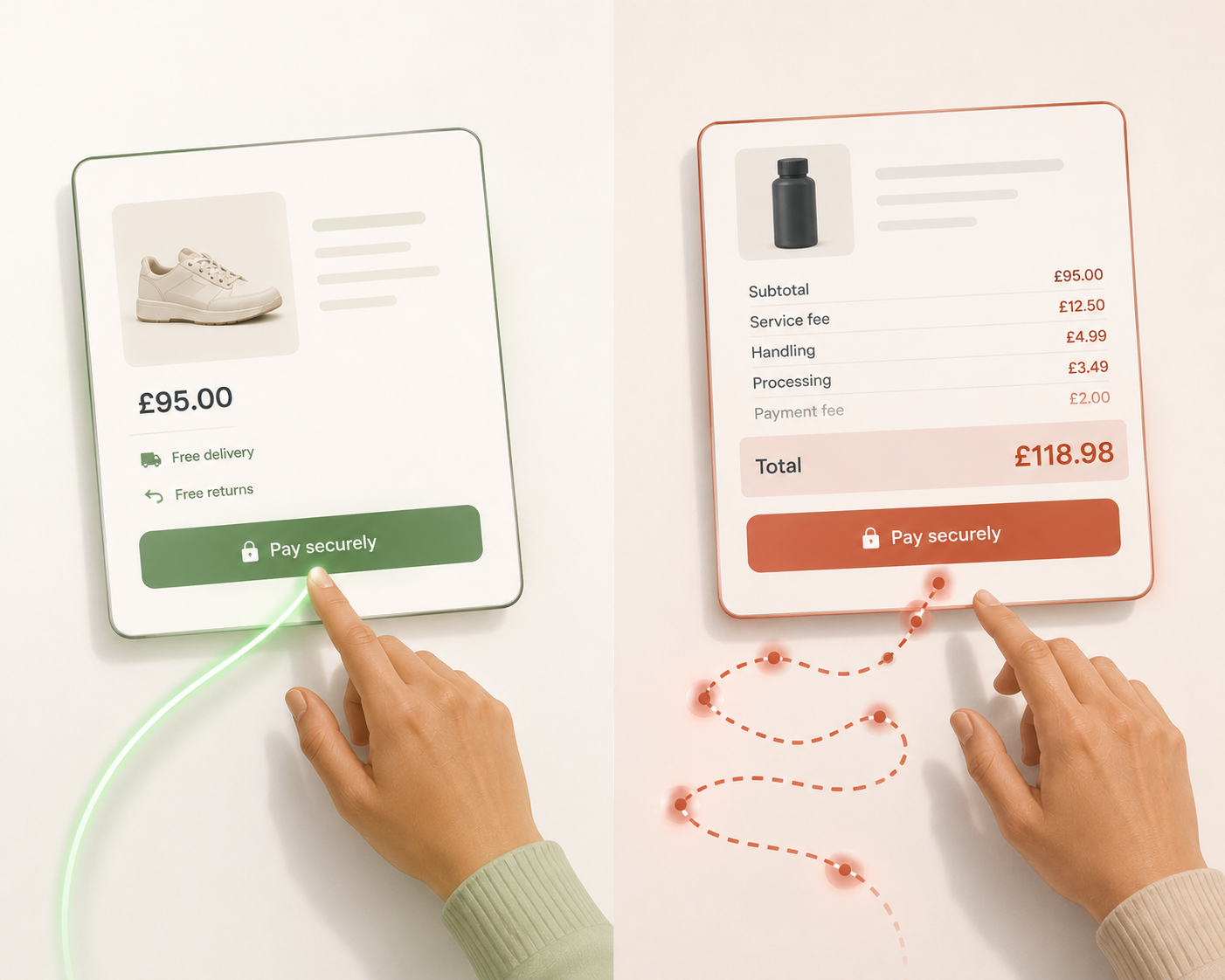
A surprising study published in Royal Society Open Science suggests people respond to unfairness physically before they fully process it consciously.
Researchers used a version of the Ultimatum Game, where participants decided whether to accept or reject financial offers while their hand movements were tracked in real time.
Fair offers produced faster, smoother and more decisive movements.
Unfair offers created measurable hesitation, slower reactions and altered movement patterns, often before participants explicitly reflected on the fairness of the decision.
It suggests fairness is not purely a rational judgement. The body appears to register social imbalance almost instantly.
Hesitation during pricing, onboarding or checkout may not simply reflect confusion or complexity. It may signal that something feels intuitively unfair before customers can articulate why.
Practical Business Takeouts:
Look at micro-behaviours, not just final decisions: Cursor hesitation, slowed scrolling and delayed taps may reveal discomfort before customers consciously recognise it themselves.
Physical hesitation can signal perceived unfairness early: Sudden pauses during pricing, checkout or contract review may indicate emotional resistance building beneath the surface.
Behavioural friction is not always cognitive friction: Customers may fully understand an offer yet still physically hesitate because something feels intuitively “off”.
Seemingly minor design details can alter embodied responses: Abrupt price changes, awkward cancellation journeys or hidden conditions may change how people physically interact with you.
Why You Remember People, Not Content
A new study from the University of Bristol suggests social media may be changing how people learn in a surprising way.
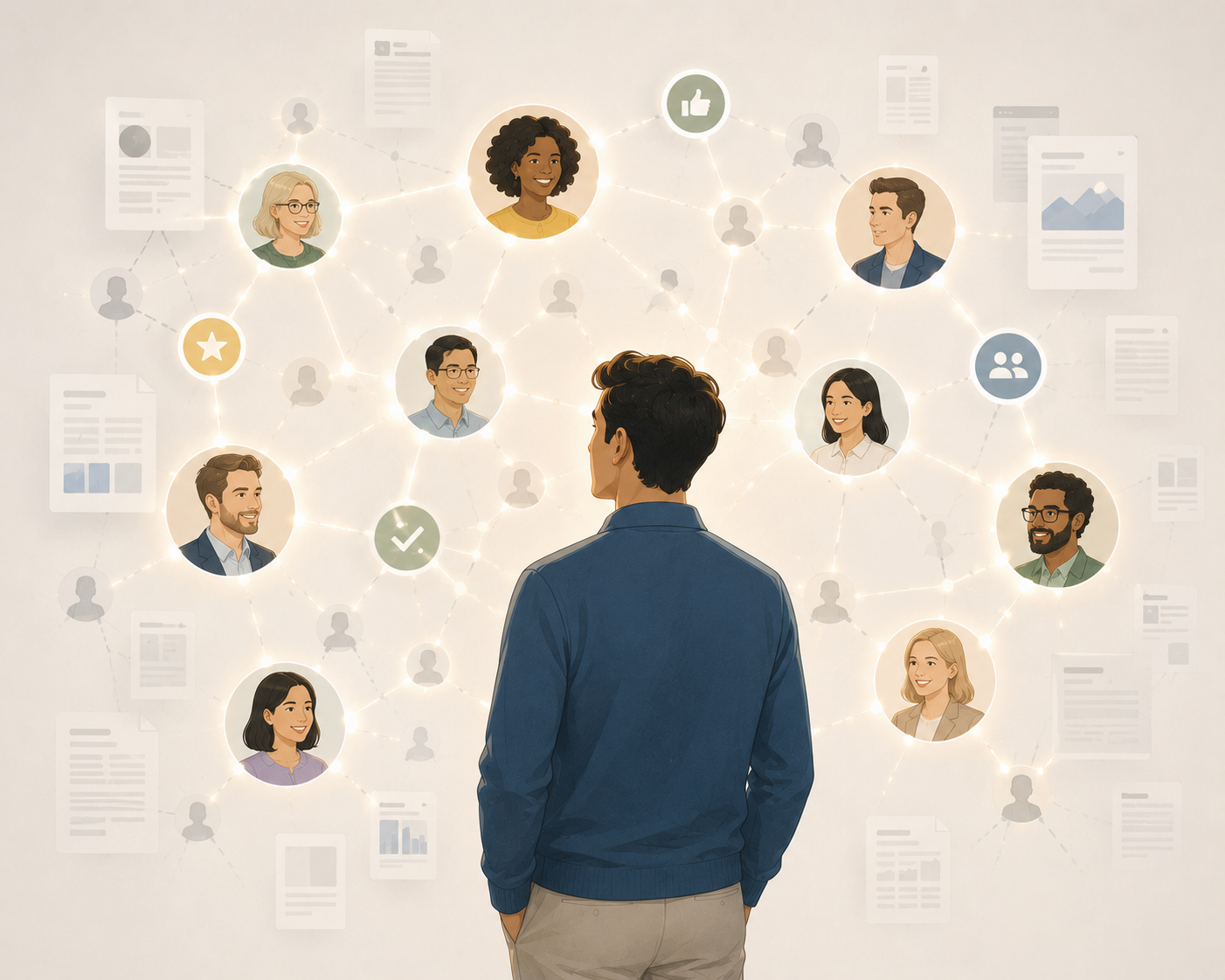
Across five experiments involving around 1,000 participants, researchers found that once people formed social connections online, they became significantly worse at remembering the actual content being shared.
Instead, they became much better at remembering who knew what, and who was connected to whom.
The effect was strongest among people with higher working memory capacity. In one experiment, content recall dropped by around 40%, while memory for social connections increased by roughly 65%.
Researchers argue that people increasingly treat online networks as an external hard drive: there is less need to remember information personally when you know where it lives socially.
Practical Business Takeouts
Expertise is increasingly inferred socially: Who shares, endorses or appears alongside content can shape credibility faster than the content alone.
Extra content may reduce learning rather than improve it: Large volumes of information encourage audiences to remember sources and shortcuts instead of details.
Communities over content: Customers may value access to knowledgeable people more than access to documents.
B2B buying is often highly network-driven: Decision-makers frequently remember who recommended a solution long after forgetting the original whitepaper.
Social proof works partly because it reduces memory burden: People prefer knowing where trusted information can be retrieved later rather than storing it themselves.
😓 Tough business challenge? See if we can help. We probably can.

James, Patrick and Dan
We practically apply the science of the human mind for hard, commercial results
Please feel free to share.
➡️ Sign up for your own MONKEY BUSINESS by clicking here