
🧠 The Psychology of Memory, Monsters and Mental Shortcuts
Welcome to our latest newsletter.
This month, we look at:
When Forgotten Memories Come Back
Why We Make Monsters
Why Replay Makes Things Feel Fake
The Problem With Making Things Too Easy
Do you want to nudge your way to better results?
📈 Grow your business?
💰 Sell more?
💎 Increase customer value?
Email us to see how behavioural science can help you.
Every so often we use our Monkey Business newsletter to share useful nuggets, opinions, and findings as food for thought. Sign up here.

When Forgotten Memories Come Back
We've all had the experience of suddenly remembering something we hadn't thought about for years.
New research suggests those memories may not have disappeared at all.
Researchers studying mice found that during late adolescence, a key memory region of the brain undergoes an unexpected period of remodelling. As the brain rewires itself, memories formed earlier in life become temporarily harder to retrieve, even though they haven't been erased.
Later, many of those memories return, although often with less detail than before.
The findings suggest that forgetting isn't always a failure of memory. Sometimes it's a temporary problem of access while the brain reorganises itself.
It just hasn't been given the right cue to come back.
Practical Business Takeouts:
Remind, don't always repeat. A familiar logo, slogan or sound can reactivate existing memories more efficiently than introducing a completely new message.
Bring back old campaigns.Well-known brand assets can regain their impact years later because the memory often survives even when it feels forgotten.
Design cues can trigger recall. Distinctive colours, packaging, jingles and taglines act as retrieval cues, helping customers reconnect with existing memories.
Keep brand assets consistent. Frequent changes to logos, colours or taglines remove the very cues that help people retrieve existing memories.

The Problem With Making Things Too Easy
For years, businesses have been told to make everything effortless.
Simplify the message. Remove the friction. Reduce the thinking.
New research suggests there are times when that's exactly the wrong thing to do.
Researchers found that when knowledge flowed too freely through organisations, people became better at consuming other people's ideas but worse at creating their own.
Introducing a small amount of productive effort encouraged people to engage more deeply, build their own understanding and generate more original thinking.
Too much effort slowed collaboration. Too little encouraged passive consumption.
The sweet spot lay somewhere in between.
The finding challenges a common assumption. Making information easier to access isn't always the same as making it easier to understand.
Practical Business Takeouts:
Ask customers to think before you explain. A simple prediction, estimate or question encourages people to build their own understanding rather than passively receiving yours.
Replace passive content with participation. Calculators, quizzes, configurators and interactive tools often create deeper understanding than simply presenting the answer.
Don't answer every question immediately. Allow customers to explore, compare or discover. A little mental effort can make the learning stick.
Differentiate between buying and learning. Purchasing should feel effortless. Understanding your product may benefit from a little more engagement.

Why We Make Monsters
Frankenstein. Dracula. Zombies. Godzilla.
According to neuroscientist Bradley Voytek, monsters endure because they give shape to fears that are otherwise difficult to explain. For example Zombies have reflected anxieties about racism, consumerism, environmental destruction and genetic engineering.
Today's fears about artificial intelligence and job security may simply produce a new generation of monsters. Horror works because it turns vague uncertainty into something tangible that our brains can understand.
Monster stories allow us to confront those fears from a safe distance while satisfying an ancient instinct to detect potential threats.
Customers may well respond to stories that help make invisible worries visible and understandable.
Practical Business Takeouts:
Name the anxiety. Customers often feel a problem long before they can explain it. The brands that articulate the worry first can become the obvious solution.
Make invisible threats tangible. The more concrete the problem feels, the easier it becomes for customers to recognise it in their own lives.
Be careful what monster you create. Fear is memorable, but it should point clearly towards a credible solution rather than leaving customers feeling overwhelmed.
Every category has a monster. Whether it's wasted money, identity theft, poor sleep or missed opportunities, successful brands often succeed because they make an invisible threat easier to recognise.
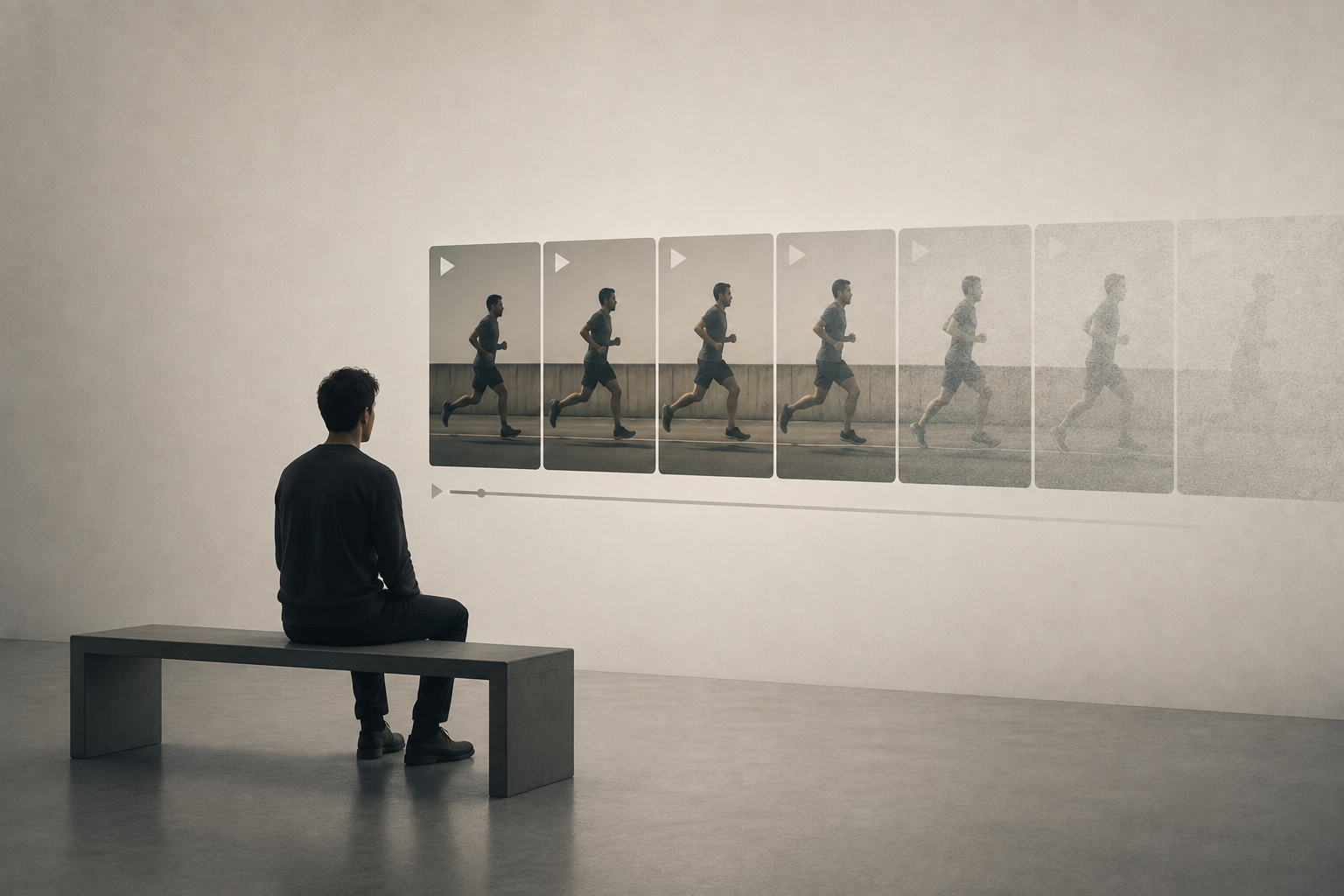
Why Replay Makes Things Feel Fake
Seeing something twice should simply reinforce what happened.
But new research suggests it changes what we think happened.
Across nine experiments involving more than 10,000 participants, researchers found that replaying the exact same video made people's behaviour appear less spontaneous and more rehearsed.
Whether participants watched auditions, adverts or potential courtroom evidence, repeated viewing led them to judge the same actions as more scripted, despite knowing they were watching the identical recording.
The brain appears to blur the distinction between replaying behaviour and performing it again, creating the impression that the action itself has become more practised and less authentic.
Practical Business Takeouts:
Don't mistake repetition for authenticity. Showing exactly the same customer testimonial or founder story repeatedly may gradually make it feel more staged than sincere.
Be careful with social proof. Seeing the same creator, customer or employee deliver the same story repeatedly may unintentionally make it feel less genuine.
Use behind-the-scenes content carefully. Small variations, outtakes and unscripted moments can counteract the impression that everything has been carefully rehearsed.
Authenticity may have a shelf life. Repeated viewing can quietly change what audiences think they're seeing.
😓 Tough business challenge? See if we can help. We probably can.

James, Patrick and Dan
We practically apply the science of the human mind for hard, commercial results
Please feel free to share.
➡️ Sign up for your own MONKEY BUSINESS by clicking here